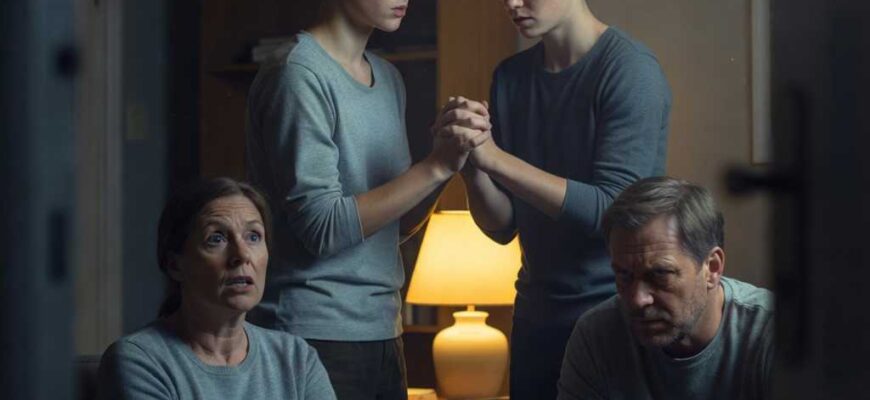
It was many years ago now, in the Danish city of Aarhus, and reflecting on it today brings a mix of emotions as I remember how the sounds of discord could fill an entire stairwell. “What is wrong with you this time?! How long must this continue?! I have had enough of it all!” the female voice emerging from behind the door of one apartment could be heard throughout the whole building.
At that very moment Signe and Mads were ascending the stairs. They came to an abrupt halt, as if they had run into an invisible wall. For a fleeting second their eyes met, and in that brief exchange no words were required. Both grasped the situation without a sound: it would be wiser to depart now. Sighing in unison, they turned and quietly made their way away from the building. Returning to the apartment that day was clearly not in their plans.
Who would choose to spend an evening listening to unending parental disputes? Definitely not these two! The pair strode purposefully toward the adjacent building where their grandmother Katrine resided. Lately her place had served as their genuine haven. Whereas before they visited her only on weekends, now they sought shelter there nearly every night.
The environment in their parents’ home had become intolerably strained long ago. The parents seemed to have forgotten the world around them, yelling at one another without pause. What made it worse was that they increasingly attempted to pull the children into their battles.
At times the mother would spin toward her daughter and insist: “Tell me, am I correct? You concur with me, yes?”
At other times the father, not awaiting a reply, would address his son: “No, I am the one who is right in this! Affirm it!”
Signe and Mads remained quiet. They had no desire to take sides or join this perpetual clash. All they sought was silence, tranquility, and comfort things they discovered at their grandmother’s.
These episodes happened daily, resembling a scratched record no one dared to remove. The children had grown adept at detecting the faint cues that trouble was brewing. By the pitch of the voice, the abruptness of gestures, the manner in which the parents eyed one another these all became indications that departure was due. Which youngster would relish residing in perpetual strain, where every discussion might transform into a noisy row in an instant?
The siblings struggled to comprehend what had ignited this upheaval. Their family had never been flawless, unlike those depicted in commercials, yet previously the parents managed to reach agreements! Disagreements arose, naturally, but they concluded not with shouts but with composed discussions. Mother could scowl, father could elevate his tone slightly, but within half an hour matters were resolved. All would reconvene at the table, sip tea, and chat about weekend arrangements.
Then, roughly two years earlier, a shift occurred… It felt as though the former parents had been surreptitiously exchanged for others who discovered pretexts for quarrels in the most mundane matters. A soiled mug abandoned on the table? Grounds for an extended lecture on heedlessness and lack of respect. A shirt suspended from the incorrect peg? Justification for sarcastic observations regarding household order. A teaspoon left in the basin? Virtually an offense meriting a lengthy inquiry!
One evening Signe was seated in the kitchen at her grandmother’s, idly swirling a spoon in her tea. She stayed silent for quite some time, observing the golden eddies in the cup, before suddenly inquiring with sorrow: “Well, how did it come to this, grandma? Everything altered after their holiday together. What transpired there?”
Katrine paused briefly, placed her cup on its saucer, and carefully stroked Signe’s arm. She too only surmised the causes of the family rift, and these surmises brought her no joy.
“The grown-ups will handle it themselves,” she answered gently, endeavoring to sound assured. “Occasionally individuals require time to discern the proper course of action.”
Signe nodded, yet skepticism lingered in her gaze. She realized her grandmother was concealing something, but refrained from insisting. To what end? While regarded as youngsters, nothing of import would be confided.
“We cannot endure these shouts any longer!” Mads cried out in despair. “We cannot complete our lessons properly or read a book! I cannot even recall the last occasion we gathered as a family around one table. If being together is so burdensome for them, let them divorce it will ease things for everyone!”
The words escaped unbidden, yet they encapsulated the reality of the preceding months. Mads voiced not merely his own sentiments he understood his sister shared them! Peace had long vanished from their home: either mother would utter something sharply or father would respond with irritation, and thus another altercation would commence, offering no refuge…
“Mads…” the grandmother faltered. She set down her knitting, regarded her grandson intently, and gradually shook her head. “But have you considered what will ensue should they divorce? You two will need to be separated. Are you prepared to reside apart from Signe?”
“We shall live with you!” Signe promptly declared, fixing her grandmother with imploring eyes. “We are here nearly constantly as it is! Surely you do not object?”
Katrine remained still. She comprehended the grandchildren’s emotions observed the hardship they endured, their weariness from the ceaseless parental conflicts. On one side, the children would indeed be secure here within a serene, amicable setting where lessons could be done absent shouts, books read in quietude, and a sense of protection felt. She cherished them deeply and stood ready to envelop them in solicitude.
On the other side, what of their parents? How to convey that the children no longer wished to dwell at home? Would they consent to such an arrangement? And should they how might this affect their bonds with the children? Could the outcome of this step prove a total severance from the parents?
“Let us not hurry,” the woman pronounced after a profound sigh. “I am always delighted to have you here, as you are aware. But first let us attempt to converse with your mother and father. Perhaps collectively we can discover a means to rectify matters.”
“Do not fret, we will speak with them ourselves,” Signe asserted with assurance, beaming. Grandmother had nearly consented, and that mattered most! “Only please do not turn us down! We truly cannot remain there any longer! And it will be preferable for them apart otherwise they might one day inflict harm upon each other! Yesterday I witnessed father lift his hand toward mother… He did not strike, truly! Yet he was close to it.”
Signe grew quiet, recollecting that dreadful instant. She had entered the kitchen for a glass of water and halted at the threshold: her father stood angled toward her mother, his arm suddenly ascending, while her mother instinctively crouched. Moments later the father dropped his arm, but that instant elongated into an eternity for Signe.
“Grandmother, agree!” Mads backed his sister. He drew nearer, grasped his grandmother’s hand, seemingly fearing she might refuse. “We will assist you with all household tasks. Just do not make us return there. They pay us no heed whatsoever! Yesterday I approached father and mentioned there would be a parent meeting. Do you know his reply? ‘Ask your mother!’ So I did. Can you guess mother’s response?”
“Ask your father?” Katrine inquired softly, already anticipating the answer.
“Precisely!” Mads chuckled bitterly. “And afterward they quarreled for two more hours over which of them would attend the meeting. They remained in separate rooms and hollered across the hallway. While I merely stood and listened.”
“I requested signatures for the permission to join the museum outing,” Signe added, casting her eyes downward. Her fingers anxiously twisted the sleeve’s edge. “Now I am the sole pupil in class who will not participate. Neither signed the form. Instead they resumed bickering mother shouted that it was father’s responsibility, while father maintained that mother ought to manage school affairs.”
Katrine regarded her grandchildren and perceived the depth of their exhaustion. Their eyes betrayed a weariness beyond childhood one accumulated over months of days mirroring one another, where family warmth yielded to perpetual disputes, and support gave way to apathy.
“It is ever thus,” Mads sighed, letting his shoulders slump. His tone conveyed fatigue, as though he had voiced this countless times before. “Every approach we make becomes a catalyst for fresh discord. We scarcely wish to come home. A few days past we arrived at eleven in the evening and imagine, were we scolded? No! They simply directed us to bed, without inquiring where we had been. Yet later they spent ages faulting one another for deficient child-rearing.”
The adolescents exhaled together once more. Over the recent months they had earnestly pondered divorce as the sole resolution to their predicament. Yet the prospect of being parted from one another, an inevitable consequence of divorce, filled them with dread. One would remain with mother, the other with father, transforming their customary closeness into infrequent weekend encounters.
They weighed alternatives, deliberating in hushed tones during evenings alone in their room. On one occasion Mads jestingly proposed fleeing the home merely packing rucksacks and departing in any direction. He uttered this with a grin, aiming to ease the tension, yet Signe embraced the notion earnestly. Her eyes sparked momentarily, after which she murmured: “What if we actually leave? Even for a couple of days…” In that instant both apprehended that the domestic situation had grown so intolerable that even the notion of escape no longer appeared entirely mad.
Then it struck them: grandmother! Why not relocate to her? This notion arose simultaneously in both, as if their thoughts aligned. Signe articulated it first: “What if we ask grandmother to let us stay with her? She surely will not scold or shout. And we will avoid listening to these interminable quarrels…” Mads promptly continued: “Yes! She is kind, forever supportive. And her apartment is ample sufficient space for us both.”
They commenced envisioning a fresh existence: tranquil breakfasts, the chance to study in quiet, evenings engaged in board games alongside grandmother. No shouts, no reproaches, no necessity to conceal in their room to evade a heated reaction. After an extended period, hope kindled in their hearts once more. Let the parents resolve their issues independently, while they at last attained serenity such were the thoughts of Signe and Mads as they pictured their life with their grandmother…
“Mother, father, we must discuss something important,” the twins declared resolutely, positioned before their parents. They had deliberately awaited an evening when both were present and entered the living room with determination. Signe clutched Mads’ hand firmly this aided her in sustaining her resolve. “But first, promise to hear us out completely before offering your views.”
Henrik lifted his gaze from the telephone in astonishment. Lene, arranging items upon the sofa, jerked upright. Her countenance betrayed the impression that the children had voiced something utterly inconceivable.
“This stems entirely from your manner of raising them!” she huffed, folding her arms across her chest. “The children are now imposing terms upon us! As though we must account to them!”
“And who says that!” the man retorted at once, discarding the telephone. “I am always working, striving to sustain the family. You have been with them constantly! And what have you imparted to them? Why do they now issue commands?”
The twins glanced at one another. They had foreseen such an occurrence the talk would veer into the familiar path of reciprocal accusations. Yet retreat was not an option.
“Stop!” Signe nearly cried out. She advanced a step, striving to articulate distinctly and steadily, though inwardly she quivered. “Mads and I have reflected and concluded that you ought to divorce.”
Instantly the room grew hushed. Lene stood frozen with lips parted, while Henrik rose slowly from the sofa.
“Such news!” the mother’s voice assumed a menacing quality. “Signe, you remain too young to dictate to adults how we ought to conduct our lives! And what else have you ‘concluded’? Perhaps you will also apportion the apartment on our behalf?”
“Should you refuse to divorce, we shall appeal to the child welfare authorities,” Mads gripped his sister’s hand as though drawing power from the contact. His voice carried firmness, though he himself harbored doubts about the gravity of his words. “Then, father, you could jeopardize your employment. Scandals are not tolerated in your firm, correct? You mentioned yourself that reputation means everything.”
“And you, mother,” Signe went on, meeting her mother’s eyes directly, “will lose the respect of the neighbors. They will cease speaking with you! All are aware of your shouting matches, and we shall supply further particulars!”
“They are threatening us! Behold them!” Lene finally managed, shifting her look between the two. “These are our own children! How can you treat us so?”
“We are not threatening,” Mads spoke softly yet assuredly. “We merely desire for you to grasp that such a life is unsustainable. We are exhausted! Exhausted by the shouting, by your failure to listen, by the way even simple requests escalate into uproar.”
“You will divorce and separate, while we reside with grandmother,” the children concluded together, having practiced beforehand. “This will benefit all: calm for us, an end to constant strife for you. We no longer wish to stand between you like between two fires.”
The parents were immobilized. For the first time in an extended period they found themselves without a response. Ordinarily such discussions prompted immediate arguments, interruptions, searches for blame yet now both appeared speechless.
Their thirteen-year-old offspring were acting in a wholly unanticipated fashion! Signe and Mads stood united, hands clasped, regarding their parents with resolve, devoid of customary shyness. Moreover, they addressed matters of such gravity that the adults themselves avoided contemplating.
The couple had themselves mulled over divorce repeatedly. Yet they were invariably halted by one identical query with whom would the children remain? Parting the twins seemed inconceivable they shared an extraordinary bond, always acted in concert, bolstered one another. The parents could not envision separating them, compelling them to inhabit distinct dwellings, meeting solely on weekends.
The notion of grandma had not previously been entertained. For some reason it had never entered their minds likely because both were excessively consumed by their resentments and mutual grievances. But now, upon hearing the children’s suggestion, Henrik and Lene could not help but ponder: might this indeed be the solution? Grandma adored the grandchildren, possessed a roomy apartment, welcomed their visits always… Perhaps this would truly alleviate at least some of the difficulties?
“I shall telephone mother,” Henrik uttered at last between clenched teeth. His voice emerged muffled, as if forming the words demanded effort. “If she consents…”
He failed to complete the sentence. Lene interrupted sharply, her tone carrying a weariness that startled even her: “Then we shall at last cease tormenting one another. Make the call. I shall rejoice at no longer encountering your face daily.”
Her statement lingered in the air. She had not intended such sharpness, but years of stored hurts and disillusionments had propelled the words forth.
“And I shall be equally pleased!” Henrik responded, attempting to mask with sarcasm the hurt inflicted by his wife’s remark.
No malice colored his delivery merely a rueful grin at the state their domestic existence had reached. He retrieved his phone and gradually entered his mother’s number. As the tones rang, both spouses directed their eyes elsewhere, shunning mutual glances. They remained uncertain of the conversation’s outcome, yet recognized that the irreversible threshold might already have been crossed…
On that day the Nielsen family embraced a pivotal choice. It commenced with an extended discussion between Henrik and his mother. Katrine attended closely, refraining from interjections, posing only occasional questions for clarification.
Once Henrik had conveyed the entirety, a silence ensued. Grandmother exhaled deeply and declared: “Provided you both recognize this as preferable for the children, I consent. They will be protected here, and I shall look after them.”
Toward evening the spouses convened in the kitchen the first instance in a considerable while absent shouts and reciprocal reproofs. They positioned themselves facing one another and commenced deliberating the particulars. Incrementally, step by step, they aligned on this: divorce constituted the sole sensible exit from their circumstances. The children would relocate to grandmother, and the parents would remit funds to her monthly for their upkeep.
Nonetheless, neither contemplated abandoning the children to chance. Father and mother alike vowed solemnly to visit on weekends albeit alternating days, thereby reducing their own interactions.
“I shall arrive Saturday morning to take them for an outing, and you on Sunday,” the man stated wearily, prompting his wife to nod in accord. “This simplifies matters. Above all, the children must not feel forsaken.”
Their paramount objective was to curtail communication and thus forestall fresh disputes. They pledged to avoid discussing one another before the children, refrain from swaying them to either side, and abstain from airing grievances in their presence.
“We remain their parents,” Henrik affirmed. “And must continue as such, even if we cease to be spouses.”
Time would reveal the decision’s merit. The children at last could unwind and commence living as typical adolescents. Signe enrolled in an art circle long having aspired to it, yet previously time was scarce amid ongoing anxieties. Mads took up football, forging new friendships within the squad. They resumed sharing time: strolling through the town, attending films, debating school topics without dread of an impending row.
Academic consistency also returned. They now possessed a tranquil space for studies, undisturbed by shouts or debates. Assignments were completed serenely, sans anxiety, promptly influencing their marks. Instructors observed the alterations: “You have grown so focused, children! Maintain this!”
Life gradually settled into a fresh rhythm imperfect, yet serene and foreseeable. The children ceased retreating to their room, ceased flinching at raised voices, ceased fretting over every action. They simply existed in the manner adolescents ought, fortunate to locate anchorage amid the gravest trials…
Five years on, the Nielsen family’s existence proceeded evenly and peacefully. Signe and Mads had grown accustomed to the revised routine: education, activities, gatherings with companions, cozy evenings at grandmother’s. The parents persisted in visiting alternately each on their designated day, bearing gifts and care, yet free of mutual grievances. Across those years they had mastered communicating with restraint and courtesy, absent the prior surges of rage.
The initial direct encounter between the former couple took place during the children’s graduation celebration. The school hosted a formal gathering, and both parents attended as expected. Initially they maintained distance, occupying spots at opposite ends of the hall, yet the frost gradually thawed.
As dancing commenced, Henrik approached Lene unexpectedly: “Shall we dance? To recall old times.”
She paused momentarily before nodding.
Following the event they lingered long in the school courtyard, observing graduates reveling near the fountain. Talk arose naturally initially concerning the children, subsequently the past.
They conversed extensively that night, reminiscing joyful episodes from their marriage and comporting themselves admirably. They avoided old wounds, focusing instead on the positives that had once united them. The twins, observing from afar, could scarcely contain their delight. Nevertheless, it pained them to witness two of their dearest treating each other nearly as adversaries.
Yet thunder clapped from a serene sky. The following day Henrik and Lene summoned the children to a café. Over tea, exchanging looks, they joined hands, and Henrik proclaimed with a broad grin: “Children, your mother and I have deliberated and resolved to wed once more. These years have shown us that our affections persist! We continue to love one another and wish to restore our family.”
His voice rang with joy, as though imparting life’s greatest tidings. Lene radiated, anticipating an exuberant reply.
The twins met each other’s gaze their expressions clouded instantly. Distrust flickered in Signe’s eyes; Mads tightened his fists beneath the table. Once more the same error! What occupied their parents’ minds? Could they coexist without discord?
“Truly?” Signe managed only to say.
“Without doubt,” Henrik replied assuredly. “We have both evolved. Mastered listening to one another. And we seek to afford our family another opportunity.”
The children stayed mute. Turbulent sentiments churned within: one part yearned to trust the parents had truly transformed; the other dreaded reliving prior anguish.
Still, Signe and Mads refrained from dissuading them. They offered no commentary on the announcement, deeply wounding the parents. Lene regarded the children perplexedly: “Are you not pleased? We believed you would rejoice for us.”
Yet the twins merely glanced at each other and lifted their shoulders. What could they utter? “Do not proceed! Do not spoil your lives!”? Words lodged in their throats. They wished not to appear unfeeling, yet could not feign that all was well.
Conversation faltered until the meeting’s close. The parents endeavored to outline their intentions; the children assented politely, though their minds wandered. En route home Signe murmured to her brother: “Hopefully they comprehend their actions.”
Mads responded with naught but a sigh…
“So, we depart for København?” Signe opened her laptop, preparing to peruse university sites. “Farther from this chaos. I can already foresee the conclusion of this spectacle!”
“Assuredly we depart,” Mads declared with resolve, a maturity beyond his years audible in his tone. He passed a hand over his hair, seemingly attempting to dislodge the weight of recent months. “They will coexist tranquilly for a month, two at most. Then anew: shouts, slamming doors, accusations… I refuse to remain a captive to their bond. I do not wish each morning to speculate on their awakening mood and toward whom the next torrent of grievances will be directed.”
He rose and traversed the room, absentmindedly gathering strewn books. A singular notion revolved in his mind: why do adults, meant to exemplify wisdom and steadiness, conduct themselves as erratic youths? Why, rather than addressing issues, do they repeatedly tread the same misguided path?
“We must go,” he reiterated, pausing by the window. Beyond the pane dusk descended gradually, tinting the city in gentle orange hues. Mads gazed outward, as though striving to discern his future therein. “Far away. Sufficiently distant that their disputes cannot extend to us. Let them manage their affairs. We are no longer their counselors, intermediaries, or shields. We possess our own existence, our aspirations, and I shall not permit them to undermine it with yet another cycle of parental folly.”
“When shall we submit the applications?” Signe inquired evenly.
“Tomorrow,” Mads answered without wavering. “To preclude any reconsideration.”
The young woman nodded wordlessly, her attention fixed on the display. Pages of København university websites scrolled by she had spent a week examining curricula, dormitory conditions, and post-graduation employment outlooks. Beside the laptop in her notebook accumulated lists: advantages and drawbacks of each choice, required papers, submission deadlines, admissions office contacts.
“Above all, to study undisturbed, free from their disputes,” she voiced quietly, as if concluding her reflections. “Fortunate that we shall be so removed.”
“Indeed,” Mads concurred, settling beside her. He leaned slightly, scrutinizing the screen’s text. “And when they recommence determining fault, we shall remain unaware. Let them telephone, lament, attempt to convene us for a ‘family discussion’ we participate no further. And their wish to ‘grant the relationship a second opportunity’,” he smirked ruefully, “represents their decision, not ours.”
Lene and Henrik proceeded with a second marriage after all. On this occasion they deliberately forwent an elaborate festivity: they wished to avoid superfluous costs, shunned drawing notice, and, candidly, did not feel a need for anything monumental. They confined themselves to a simple rite at the registry office and a meal among intimates parents, several friends, the children.
In photographs from that occasion they appeared genuinely content. Smiles, clasped hands, affectionate gazes passed between them. Interlaced fingers, gentle looks, soft contacts featured in the images. It appeared all grievances had been erased, that the separation years had proven advantageous, that now they knew precisely their desires, and only a luminous future awaited. The children, examining these images, could not help wondering: perhaps this time matters would indeed differ?
But… regrettably, no. The initial weeks following the wedding unfolded remarkably serenely: the couple endeavored to show greater attentiveness, uttered “thank you” more frequently, avoided faulting over minor issues. Yet old patterns gradually reemerged. Within a month elevated tones again resonated in their apartment. Initially these were measured criticisms subdued yet barbed: “Have you neglected to tidy after yourself once more?”, “Why did you fail to notify me of your delay?”, “You might have assisted, given you are at home.”
Thereafter overt clashes ensued. Disputes ignited over trifles: someone abandoned damp towels in the washroom, someone omitted purchasing bread, someone amplified the television excessively… Expressions grew acerbic, voices amplified, intervals between quarrels contracted.
And after two months, precisely as Mads had foretold, the atmosphere reached a boiling point. One evening a debate regarding who should procure groceries swelled into a tempest. Henrik, losing control, furiously hurled a cup against the wall it fragmented with a resounding clatter, fragments dispersing across the kitchen. Lene, equally incensed, seized a plate from the table and dashed it to the floor with vigor. The clamor of shattering crockery reverberated throughout the apartment.
Subsequent to such episodes the parents unfailingly sought to contact the children. Each instance the dialogue commenced identically: one would dial, scarcely recovered from the altercation, and forthwith unload pent-up grievances.
“Can you fathom what he uttered today?” Lene dissolved into sobs as Signe answered. “He makes no effort to comprehend me!”
“Son, you must understand me, she has lost all self-control,” Henrik conveyed anxiously to Mads. “I strive, truly I do, yet she appears to seek a pretext!”
However, Signe and Mads had acquired the skill to interrupt these outpourings gently yet resolutely. They no longer engaged in protracted exchanges, nor attempted to ascertain right from wrong. Their replies remained concise yet steadfast.
“Mother, I am attending a lecture presently, I shall return your call later,” Signe stated calmly, consulting the time: twenty minutes remained until class, yet she had no inclination to endure another soliloquy.
“Father, I have pressing tasks, let us address this during the weekend,” Mads responded, eyes on his laptop. He understood that permitting the parent to unburden would prolong the exchange by an hour, followed by the need to console.
“Later” and “during the weekend” were consistently deferred. The children devised pretexts academics, employment, social engagements and calls from the parents diminished over time. Signe and Mads experienced no remorse: they merely safeguarded their composure and hours, aware of their inability to alter the dynamic between their mother and father.
The twins indeed led their own lives vibrant, purposeful, distant from parental turmoils. Each day now comprised their personal obligations, pursuits, and schemes, rather than anticipation of yet another clash beyond the wall.
Signe devoted herself fully to the study of psychology. She relished unraveling the workings of the human psyche, the motivations behind actions, and methods to aid those in distress. During her third year she commenced volunteering at a support center for adolescents from troubled homes. There she facilitated group sessions, assisted youths in articulating emotions and navigating complex predicaments. Signe discerned reflections of her own history in these adolescents and sought to provide what she herself had once missed: heed, encouragement, the awareness of being listened to.
Mads discovered his calling in information technology. From his initial years he became captivated by programming the logic of code enthralled him, along with the capacity to construct functional systems and resolve intricate technical challenges. He dedicated substantial time to the computer, acquiring new coding languages and joining student hackathons. In his fourth year his group secured third place in a regional contest for mobile application development this bolstered his assurance and affirmed his trajectory. Mads secured part-time employment at a modest IT firm, where he swiftly proved himself a dependable and talented worker. Engaging with actual projects taught him collaboration with peers, efficient time management, and innovative problem-solving.
The twins initiated planning for their future independent of parental conflicts. Signe aspired to establish her practice, aiding families in achieving harmony. Mads contemplated launching his enterprise. They deliberated these ideas over tea in cafés, devised frameworks, and jotted concepts in journals. In such moments they sensed: they had foundation. They had direction. They had an existence that was solely theirs.
When Lene and Henrik once more endeavored to entangle them in their issues telephoning tearfully, recounting the woes and mutual incomprehension the twins replied with composure and firmness. They had beforehand agreed upon their approach to the discussion to avoid faltering or reverting to their customary mediating role.
“Enough, dear parents, resolve this yourselves,” Signe proclaimed resolutely. “You lead your lives, we lead ours.”
“But you are our children!” Lene wept. “You are obligated to support us!”
“If you conducted yourselves properly, rather than as infants, we would offer support,” Mads stated forthwith. “You erred in remarrying and persist in tormenting one another. Since you cannot coexist harmoniously in shared quarters, why prolong the mutual suffering? Divorce and separate already.”
Though these words might have appeared harsh, the brother and sister simply desired a peaceful existence.